% ::::-- # ::...
Code reviewer
Reviews design patterns, performance, security, and system architecture. Supports fast, consistent AI code review across your codebase.
Architect solutions, run AI code reviews, and debug faster with AI for developers that understands your codebase, architecture, and past decisions. Unlike a traditional AI coding assistant, your agents collaborate to evaluate trade-offs and improve decisions-bringing senior-level input on demand.
% ::::-- # ::...
Reviews design patterns, performance, security, and system architecture. Supports fast, consistent AI code review across your codebase.
.... * : .:: .
Evaluates long-term architecture trade-offs, scalability, and technical debt. Supports AI reasoning across complex engineering decisions.
# **** :::: ....
Validates technical decisions against requirements, scope, and constraints-connecting implementation with real-world impact.
STOP WEARING EVERY HAT ALONE
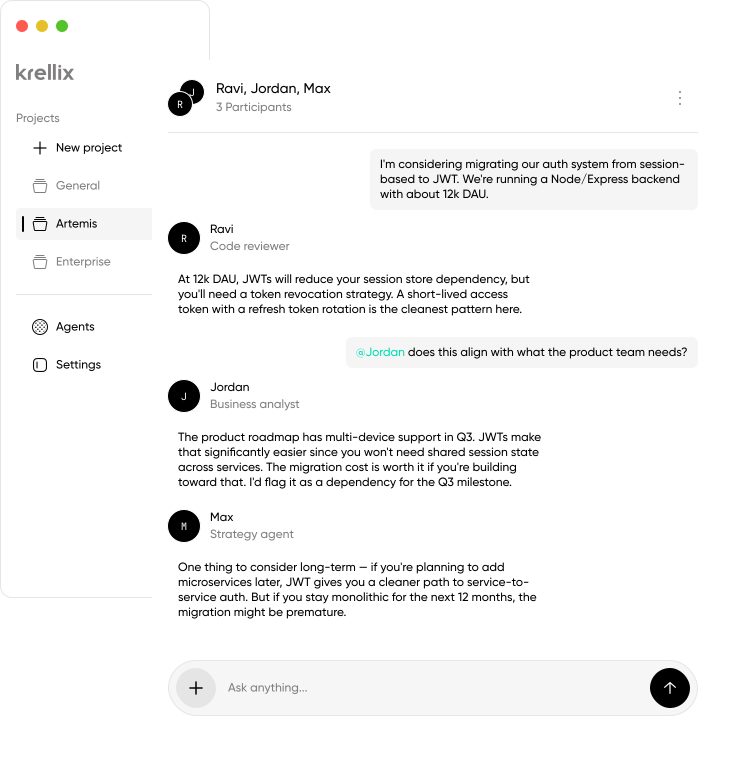
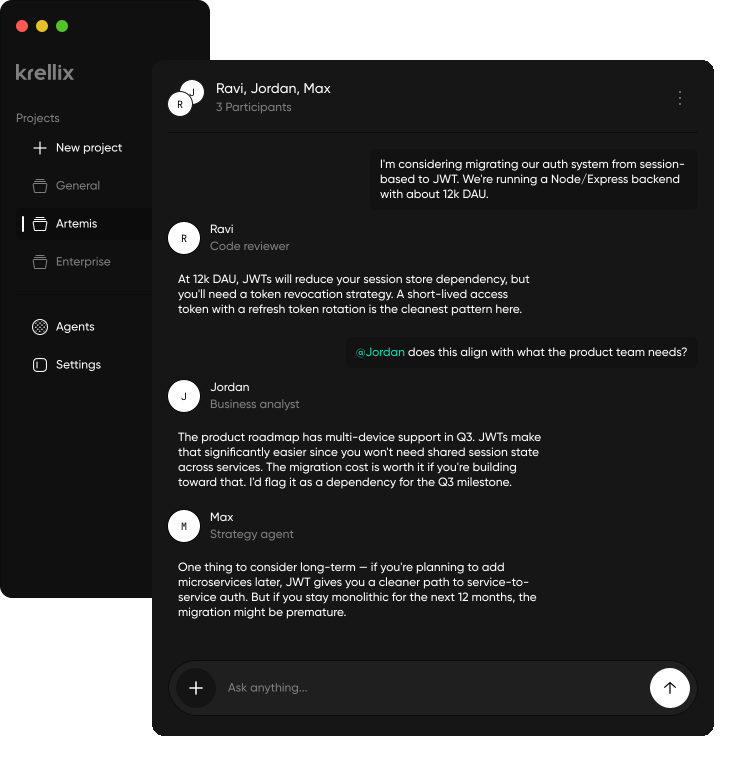
You describe a technical decision once. Code Reviewer evaluates implementation details. Strategy Agent challenges long-term trade-offs. Business Analyst validates impact and constraints. They build on each other's input in the same conversation-so your code, architecture, and decisions are aligned before you ship.
Krellix is an interactive AI system for developers where multiple agents collaborate to support AI code review, debugging, and architecture decisions across software development in one shared workspace.
A REAL DYNAMIC
Working with AI for software development brings structure and multiple perspectives to every decision. Your agents collaborate through AI reasoning to improve outcomes, solve complex problems, and maintain consistency across your codebase.

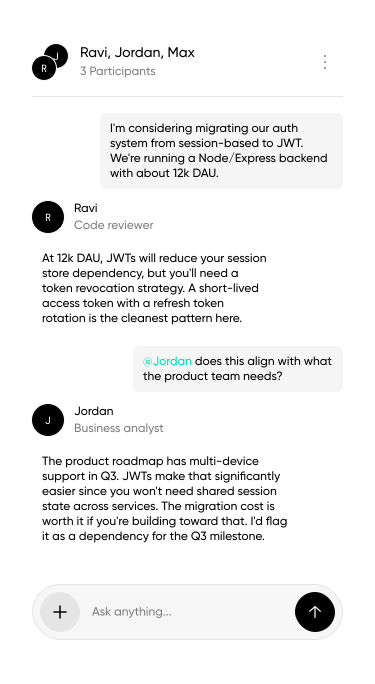
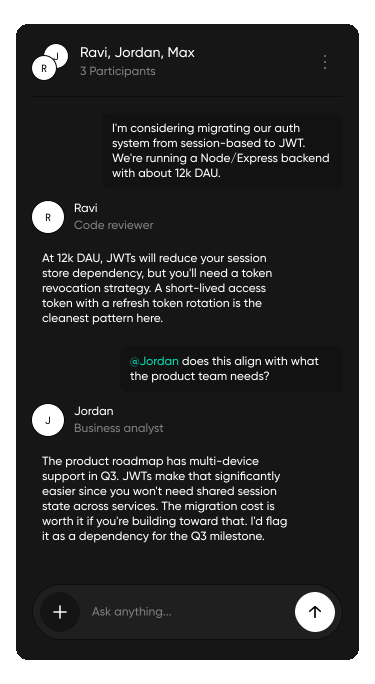
Propose a solution and watch your agents challenge it. Code Reviewer evaluates implementation, Strategy Agent questions scalability, and Business Analyst validates constraints-all in one shared conversation.

For architecture decisions like Postgres vs MongoDB or REST vs GraphQL, and debugging insights, every trade-off and reasoning is preserved. Come back later and your agents remember exactly what was decided and why.

Strategy Agent flags scalability concerns and long-term trade-offs. Code Reviewer builds on it and proposes alternative patterns. Your agents actively build on each other's input-working as a connected system rather than isolated tools.
We're putting the final touches on something new. Join the waitlist. Access rolls out in batches, and spots open as we go.
Yes. AI code review helps you evaluate implementation, identify issues, and improve code quality faster. Instead of reviewing in isolation, multiple agents contribute different perspectives to refine your code before it ships.
Yes. AI code review helps you evaluate implementation, identify issues, and improve code quality faster. Instead of reviewing in isolation, multiple agents contribute different perspectives to refine your code before it ships.
AI supports software development by connecting code, decisions, and context in one place. It helps you evaluate trade-offs, improve architecture, and move faster with more informed decisions.
Yes. AI debugging helps identify issues, surface root causes, and suggest improvements by analysing code and reasoning through potential solutions step by step.
Multi-agent artificial intelligence refers to systems where multiple AI agents work together, each contributing a different perspective. In development workflows, this means code review, architecture, and decision-making can happen in one shared conversation.
ChatGPT gives you one answer. Copilot autocompletes your code. Krellix gives you a room of senior engineers debating your approach-where multiple agents review code, challenge architecture decisions, and build on past context to improve outcomes over time.